Field Reference / 01

The Regulator
Stack Cheat Sheet

The four-agency stack that shapes how AI products launch in China, the mechanisms each one enforces, and the operating tempo that fuses compliance with product development.

For Briefing
Room Use

Western coverage treats Chinese AI governance as one faceless "state." The operational reality is a four-agency stack with distinct mandates and a release tempo measured in days.

The deeper point: in China, product, compliance, and distribution ship as one bundle, not three. This card is the org chart that replaces the Cold War analogy.

The Stack Four Agencies

CAC

Cyberspace Admin of China
Controls
Content, recommendation algorithms, generative AI services.
Mechanism
Algorithm Filing System: mandatory pre-deployment registration of model, training data, and risk controls.
Tell
For consumer-facing generative services, CAC filing functions as the launch gate. Baidu, Alibaba, and ByteDance ship to it on the same calendar as the model.

MIIT

Industry & Info Technology
Controls
Telecom licensing, industrial data classification, compute infrastructure.
Mechanism
ICP licensing, data tiering standards, domestic chip qualification (Ascend pathway).
Tell
MIIT shapes domestic compute outcomes through the Ascend qualification pathway and ICP licensing. Consumer apps reach Chinese users through MIIT-licensed hosts.

MPS

Public Security
Controls
Real-name verification, security review, content takedown enforcement.
Mechanism
MLPS 2.0 cybersecurity grading and mandatory data retention floors.
Tell
MPS sets the floor for what user data must be retained and surrendered. Most consumer platforms build on top of it.

SAMR

Market Regulation
Controls
Antitrust, pricing discipline, platform competition.
Mechanism
Concentration review, predatory pricing enforcement, merger blocks.
Tell
SAMR activates when pricing or concentration shifts the market structure. Track its enforcement actions as the leading indicator of margin floors.
The Operating Tempo

Compliance is not a gate after the build.

It is the build. Algorithm filing, security assessment, and content moderation ship as engineering deliverables inside the same sprint as the model itself. Western analysts often miss this because their mental model of regulation is post-hoc: build the product, then submit for approval, then launch.

China's leading AI labs do not work that way. Filing requirements, security review checklists, and content moderation policies sit on the same Jira board as the training pipeline. The compliance team is not downstream of engineering. It is engineering.

The result is a release tempo measured in days, not quarters. What looks from outside like state interference is, from inside the firm, a stable and predictable engineering constraint that has been priced into the product roadmap from day one.
Scene / 16 Days

When China's generative AI rules took effect in August 2023, Baidu reached public launch in sixteen days.

The speed did not reflect regulatory absence. It reflected a system where filing, security review, and product development had merged into a single sprint years earlier. The book is built around scenes like this one.

So What for Analysts Three Takeaways
  1. 01

    Retire both narratives.

    "Wild West copycat" and "Soviet top-down monolith" are equally wrong. Model the four-agency stack instead, with distinct deliverables per agency.

  2. 02

    Price capability and compliance as one line item.

    They sit on the same Gantt chart. An exposure model that treats them as separate variables tends to underprice the moat by a structural margin.

  3. 03

    Track the Algorithm Filing registry, not press releases.

    The CAC registry is the leading indicator of which models reach 100M+ users. Press cycles trail it by 30 to 90 days.

The Larger Argument

The Regulator Stack is one piece of a five-act story.

This card explains the governance machinery. The book traces how that machinery emerged, how it shaped the country's response to U.S. export controls, and how it now exports along with the technology itself. Each act below is a chapter cluster in From Lab to Life.

Act I

Origins

China's AI dominance began as commercial necessity, not a top-down research project. Baidu and others built terabyte-scale ML systems to serve search and online-to-offline super-apps.

Act II

Governance

The Wei Zexi scandal forced the shift from unregulated growth to the four-agency Regulator Stack. Algorithm filing became a mandatory engineering deliverable. This is the act this card is drawn from.

Act III

Adaptation

U.S. chip export controls forced radical efficiency: DeepSeek's Mixture-of-Experts, FP8 quantization, and accelerated adoption of Huawei's Ascend domestic hardware.

Act IV

Deployment

A permissive consumer environment, aggressive price wars, and massive business-to-government procurement pipelines drove generative AI adoption from 2023 to 2025 at unprecedented scale.

Act V

Diffusion

Chinese firms bypass domestic constraints by exporting open-weight models and bundled infrastructure to Southeast Asia, the Middle East, and Africa, exporting governance norms alongside the technology.

From the forthcoming book

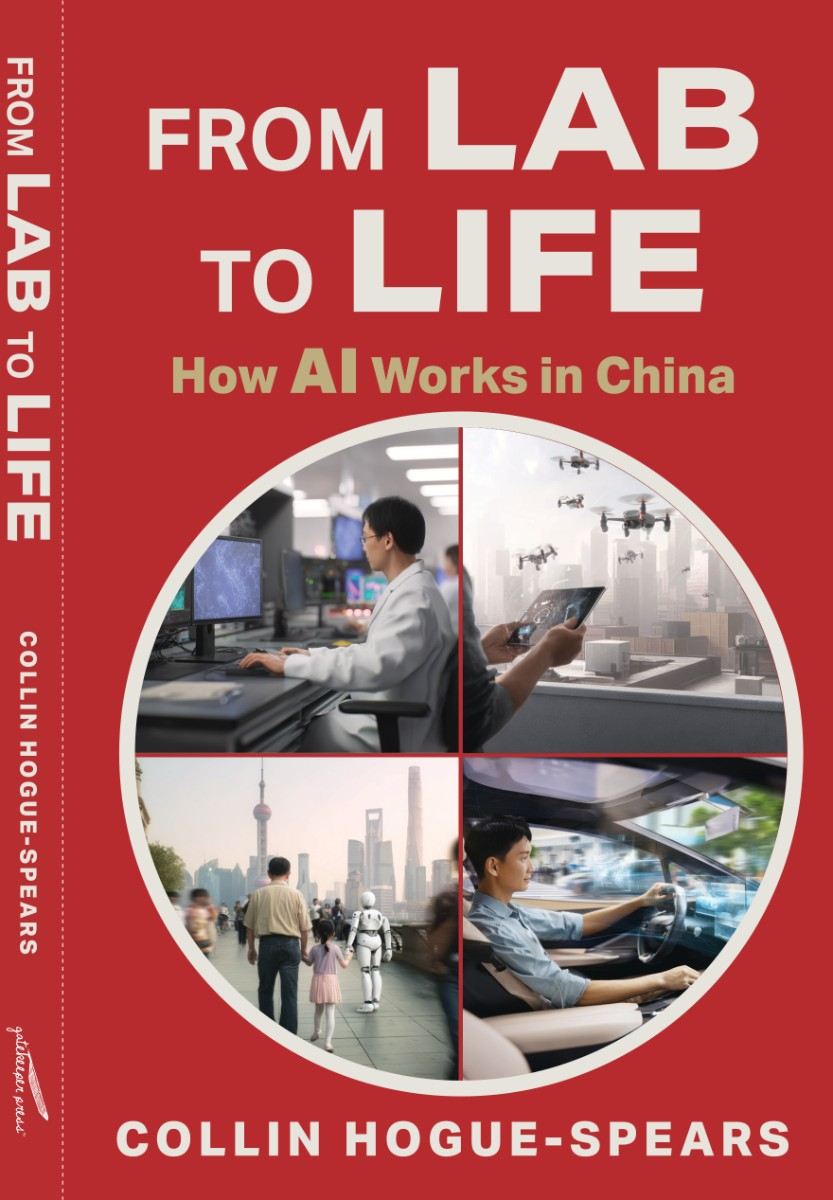
From Lab to Life

A mechanism-level operational manual for the world's second-largest AI ecosystem. June 2026.

Built from primary Chinese-language regulatory texts, company filings, and technical documentation. Drawing on the CAC algorithm filing registry, MIIT licensing publications, MPS cybersecurity grading standards, SAMR enforcement decisions, and corporate disclosures from Baidu, Alibaba, ByteDance, Tencent, and DeepSeek.

From Lab to Life Cover