arrow_back Field Reference Library
Field Reference / 02

The Open-Weights
Evaluator

A four-dimension diagnostic for Western enterprises considering Qwen, DeepSeek, GLM, Kimi, or Ernie. Not a scorecard of the models. A scorecard of your exposure to using them.

Buyer's
Diagnostic
Read This First

Chinese open-weight releases are the output of a governed ecosystem, not evidence of its absence.

A model that ships with an Apache-2.0 license file still reaches you through a training pipeline, a compliance filing, and a distribution channel shaped by Chinese regulation. Those upstream facts structure your downstream risk.

The question is not "is this model safe to use?" The question is: on which of four axes does your use case actually collide with the model's origin, and what controls do you need to own the answer?

The counterweight. Chinese open weights also deliver real advantages: strong global community validation, rapid derivative ecosystems, broad runtime portability, and reduced dependence on hosted US frontier APIs. An honest evaluation weighs both sides. Not every dimension below is distinctively Chinese; the tags on each card say which is which.

The Four Dimensions Score Independently
01
Universal China-elevated

Licensing Clarity

Do the terms permit what you want to do?

Chinese open-weight licenses range from permissive (Apache-2.0, MIT) to custom community licenses with usage caps, competitor exclusions, and jurisdictional carve-outs. License hygiene is a universal concern; it is elevated here because custom community terms are more common and because carve-outs can interact with Chinese data and content rules. Read the license, not the press release.

Ask
Which exact license and version? Commercial use permitted without separate agreement? Are outputs governed by the same license as weights? Redistribution, fine-tuning, derivatives?
Clear
Named OSI-approved license, express commercial use, no MAU cap, attribution in one paragraph.
Flag
"Community license" with ambiguous commercial clauses, usage caps that trigger renegotiation, retroactive terms that change per release.
02
Universal Context

Deployment Flexibility

Can you run it where your controls live?

"Open weights" means the file is downloadable. It does not mean your deployment path is clean. Inference infrastructure, quantization tooling, and safety-layer dependencies vary, and some releases ship with runtime components that assume hosted endpoints or call home. This is mostly a platform-maturity question, not a geopolitics question. Treat it as normal open-model diligence.

Ask
Air-gapped inference possible end-to-end? Supported stacks (vLLM, TGI, llama.cpp)? Telemetry or update channel baked in? Quantized variants and their provenance?
Clear
Weights run in standard open-source runtimes, no network dependency at inference, community-maintained GGUF / AWQ variants exist.
Flag
Proprietary runtime required, tokenizer or safety classifier calls remote service, only the API is usable and weights are theoretical.
03
Universal

Ecosystem Depth

Is there a real community, or a launch week?

A model is a project, not a file. Evaluate the surrounding ecosystem: downstream fine-tunes, third-party benchmarks, integration libraries, bug reports, and release cadence. Thin ecosystems mean you become the QA team. A deep, globally distributed ecosystem can reduce origin-linked risk by creating independent validation and distribution paths the origin cannot unilaterally close.

Ask
How many independent fine-tunes on Hugging Face? Published on third-party benchmarks, not self-reported only? Active issue tracker and responsive maintainers? Model cards in English?
Clear
Hundreds of downstream derivatives, independent third-party benchmarks match claims, predictable release cadence over 12+ months.
Flag
Single release without derivatives, benchmark numbers that appear only in vendor collateral, documentation only in Chinese without English parity.
04
China-elevated

Supply Chain Resilience

What happens if the distribution channel closes?

A weight file you pulled from Hugging Face today may be subject to a different regulatory regime tomorrow. Evaluate the full supply chain: who trained it, on what data, under which filing, and whether your copy will remain legal and usable if upstream conditions change. This axis bundles legal continuity, artifact integrity, repo durability, and regulatory reversibility — related concerns, not identical ones.

Ask
Training data provenance disclosed? CAC model filing status and current validity? Mirror available outside China and the vendor's domain? Reproducible build or cryptographic checksums?
Clear
Published data mix at the category level, weights mirrored on multiple non-correlated hosts, hash-verified release with signed artifacts.
Flag
Training data origin undisclosed or contested, single distribution channel with no mirror or hash, prior versions silently withdrawn from the vendor repo.
Decision Scorecard Score Independently

Each dimension gets its own verdict. The lowest score sets the ceiling.

Dimension
Clear
Conditional
Stop
Licensing clarity
OSI license
Custom w/ caps
Ambiguous
Deployment flexibility
Air-gapped OK
Hosted-preferred
Remote deps
Ecosystem depth
Independent QA
Vendor-led only
Single drop
Supply chain resilience
Mirrored + hash
Single host, signed
Unverifiable
Governing Rule

A Stop disqualifies production deployment in regulated or customer-facing contexts. It does not kill the model as a tool.

Internal prototyping, research, and bounded use cases remain viable. Conditional scores graduate to production only when you own a compensating control: legal review for licensing, an air-gap for deployment, internal evaluation for ecosystem, local mirroring for supply chain.

The lowest score sets the deployment ceiling, not the learning ceiling.

So What for Buyers Three Takeaways
  1. 01

    Reframe the question.

    Stop asking "is this model safe?" and start asking "where does my use case collide with this model's origin?" That moves the evaluation from abstract risk to organizational exposure.

  2. 02

    Separate universal from China-elevated.

    License hygiene and deployment maturity apply to every open model. Supply chain resilience is where Chinese origin elevates the stakes. Do not price them the same.

  3. 03

    Own the compensating control.

    A Conditional score is not a red flag, it is a requirement. The question is whether your organization actually has the legal, technical, and operational control that turns Conditional into Clear for your specific deployment.

The Larger Argument

The Evaluator is one piece of a five-act story.

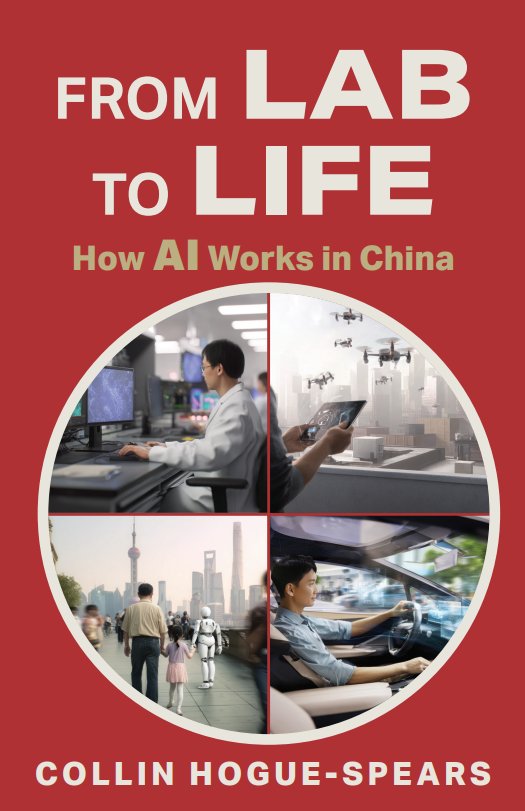
This card operationalizes one question: can you build on a Chinese open-weight model? The book traces how those models came to exist, which regulatory architecture produced them, and what their global release means for the market. Each act below is a chapter cluster in From Lab to Life.

Act I

Origins

China's AI dominance began as commercial necessity, not a top-down research project. Baidu and others built terabyte-scale ML systems to serve search and online-to-offline super-apps.

Act II

Governance

The shift from unregulated growth to the four-agency Regulator Stack. Algorithm filing became a mandatory engineering deliverable that shapes which models reach users.

Act III

Adaptation

U.S. chip export controls forced radical efficiency: DeepSeek's Mixture-of-Experts, FP8 quantization, and accelerated adoption of Huawei's Ascend domestic hardware.

Act IV

Deployment

A permissive consumer environment, aggressive price wars, and massive business-to-government procurement pipelines drove generative AI adoption from 2023 to 2025 at unprecedented scale.

Act V

Diffusion

This card lives here. Chinese firms bypass domestic constraints by exporting open-weight models and bundled infrastructure to Southeast Asia, the Middle East, and Africa, exporting governance norms alongside the technology.

From the forthcoming book

From Lab to Life

A mechanism-level operational manual for the world's second-largest AI ecosystem. June 2026.

Built from primary Chinese-language regulatory texts, company filings, and technical documentation. Drawing on the CAC algorithm filing registry, MIIT licensing publications, MPS cybersecurity grading standards, SAMR enforcement decisions, and corporate disclosures from Baidu, Alibaba, ByteDance, Tencent, and DeepSeek.

From Lab to Life Cover